
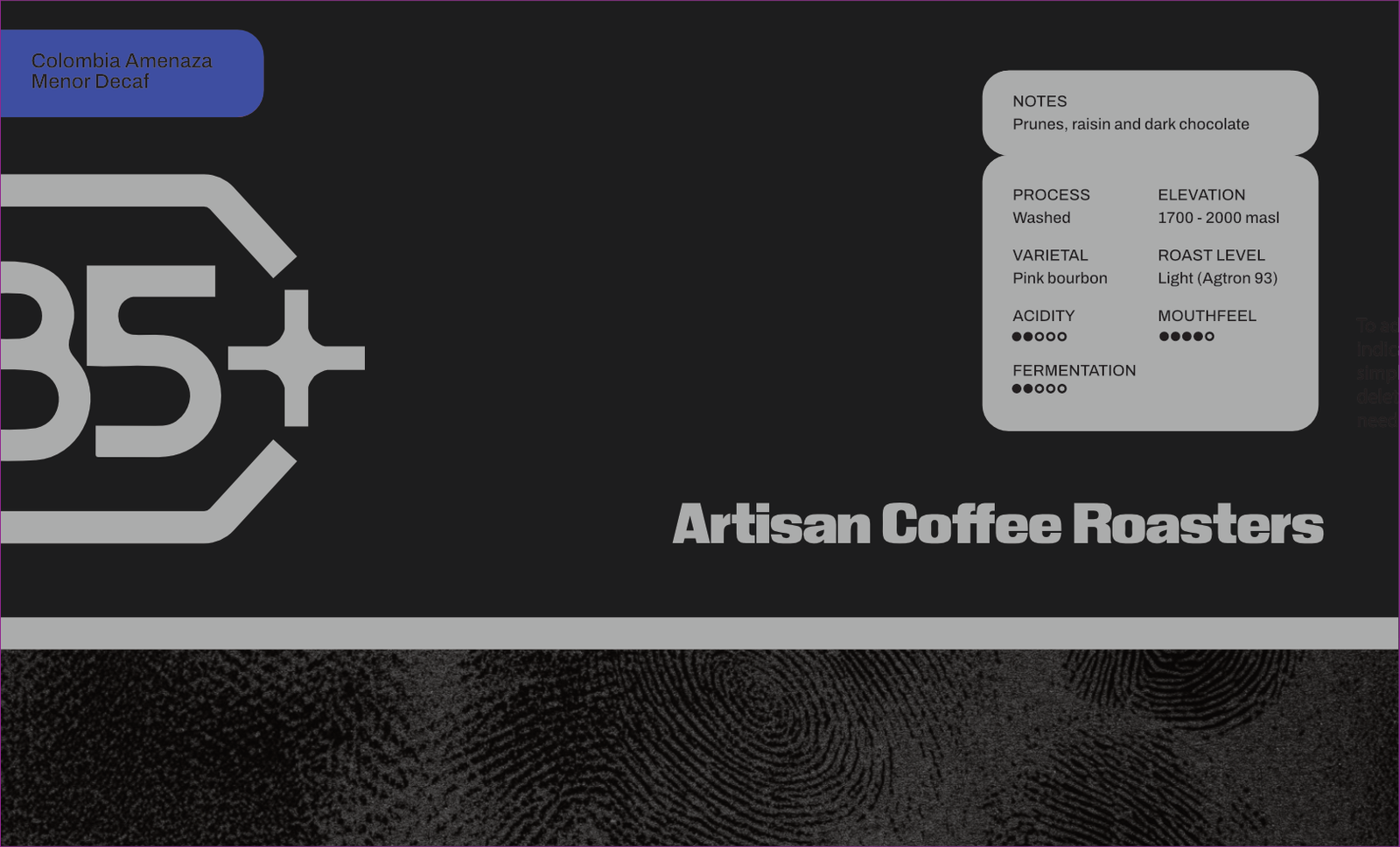
COLOMBIA AMENAZA MENOR DECAF
This Colombian Amenaza Menor Decaf offers a round, sweet profile with upfront brightness, featuring tasting notes of prune, dark chocolate, raisins, and pink fruit, all layered over a gentle biscuit background. Notes of dark fruit and rich chocolate, soft biscuit-like, finishing with a long, buttery toffee note.
This Colombian Amenaza Menor Decaf offers a round, sweet profile with upfront brightness, featuring tasting notes of prune, dark chocolate, raisins, and pink fruit, all layered over a gentle biscuit background. Notes of dark fruit and rich chocolate, soft biscuit-like, finishing with a long, buttery toffee note.
Origin Story
Amenaza Menor’ is a nod to one of our favourite bands around the office. The Sugarcane decaffeination process leaves the true character of the original coffee intact. The result is a no- nonsense, clean profile for the straightedge among us.
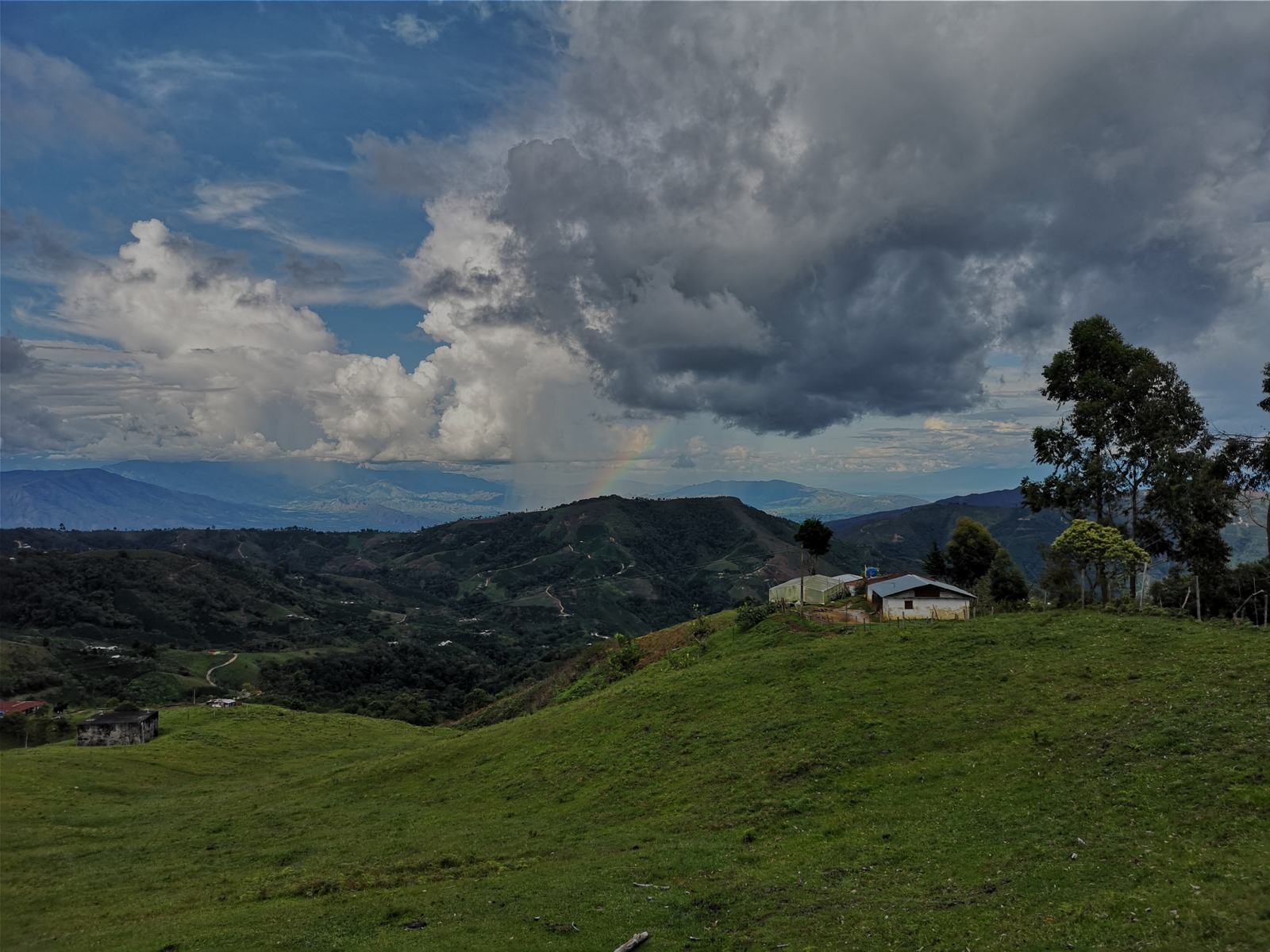
The farmers contributed Pink Bourbon parchment from nine different farms located in the municipalities of Santa Maria, Icononzo, Rovira, Rioblanco, and Ibagué, at altitudes ranging from 1,700 to 2,000 masl.
The farmers who contributed to this lot are: Diego Javier Trujillo Apache – Las Delicias Elkin Ramírez – El Mesón Willinton Hoyos – El Encanto Fredy Palomino Parra – El Jardín Cesar Calles – Los Ángeles Hernan Florez – La Granja Rolando Guerrero – Nataima Derly Herrera – La Siberia Camilo Andrés Cupitre Aldana.
Pomerania Processing: Washed Decaf The coffee is washed following the traditional Colombian method and dried on the farms in marquesinas for about 10–25 days. The farmers then deliver the parchment to Azahar, where it is decaffeinated.
Processing: Washed Decaf The coffee is washed following the traditional Colombian method and dried on the farms in marquesinas for about 10–25 days. The farmers then deliver the parchment to Azahar, where it is decaffeinated.
Details
Elevation
Process
Varietal
Score
Storage
Protect the Work in Every Bean
Freshness isn’t simply about time — it’s about control. Exceptional coffee deserves storage that honors the craft behind it. These principles keep your beans expressing their full origin character, processing detail, and intended flavor potential.
The Essentials
– Store whole beans in an airtight, opaque container. The original bag with its one-way valve is designed for this — simply press out excess air, roll the top down tightly, and secure it.
– Keep in a cool, dark cupboard, stable between 15–25°C. Avoid stoves, windowsills, and warm appliances.
– Grind on demand. Grinding just before brewing is the single most effective step to preserve volatile aromatics.
What to Avoid
– Fridge storage. Coffee is hygroscopic — it absorbs moisture and odours readily. Condensation from repeated opening and closing degrades the beans rapidly.
– The four agents of staling: oxygen, heat, light, and moisture. Control them relentlessly.
Freezing: A Precision Tool
Freezing suspends peak quality when done correctly — and damages it when done carelessly.
– Portion into single-brew or 2–3 day amounts before freezing.
– Seal in airtight vacuum bags, or press all air from heavy-duty zip-top bags.
– Grind directly from frozen (no thawing required — modern grinders handle this well), or let the sealed bag reach room temperature fully before opening to prevent condensation.
– Never refreeze.
Rest Matters: The Peak Window
There is no universal peak window. Resting requirements depend on bean density, processing method, and roast profile.
Many coffees reach full expression between 2 and 4 weeks post-roast. However, exceptionally dense, high-grown lots — such as top-tier Geishas or other high-altitude selections — often need extended rest. These coffees degas slowly and can reach their full aromatic and structural peak at 40, 50, or even 60+ days. Opening too early risks muted aromatics, hollow body, and a carbonic sharpness that masks the coffee’s true character.
How to Brew
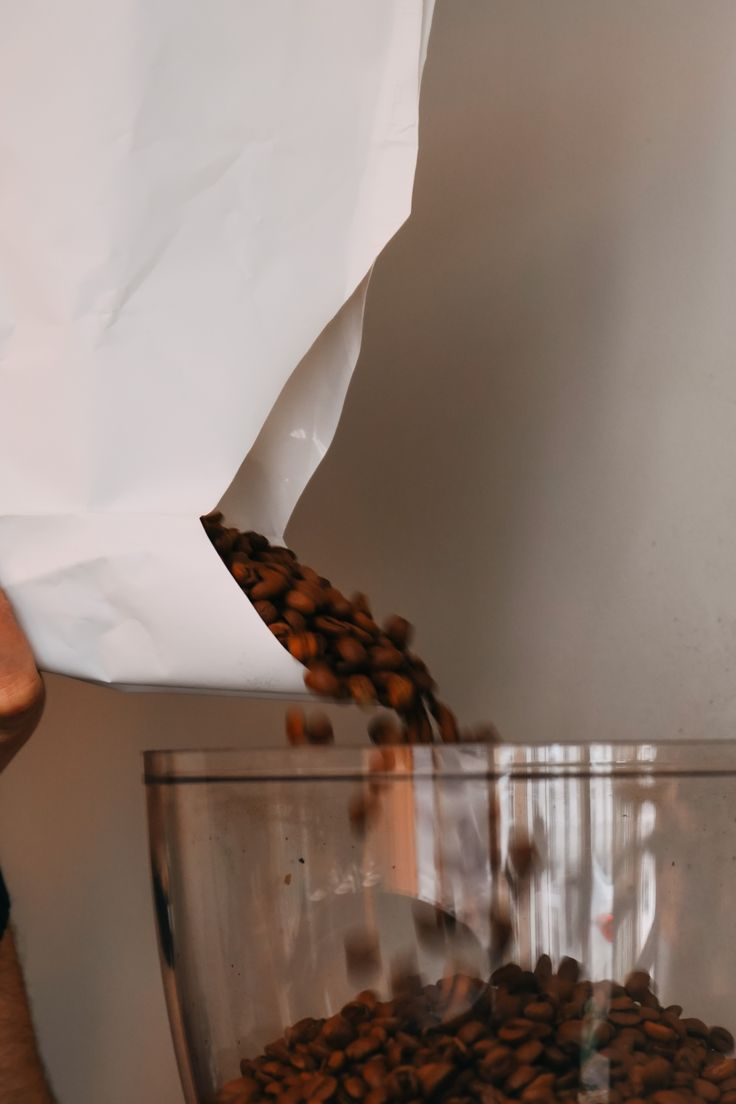
We recommend starting with a 1:18 coffee-to-water ratio, which provides an excellent total extraction level and maximizes flavor pulled out of the ground coffee. For our single origin coffees we recommend a pour over method either on a Chemex, V60 or Kalita Wave.
Exctraction Guide
How to Brew
We recommend starting with a 1:18 coffee-to-water ratio, which provides an excellent total extraction level and maximizes flavor pulled out of the ground coffee. For our single origin coffees we recommend a pour over method either on a Chemex, V60 or Kalita Wave.
Explanation Guide
Explore More
Shop All