
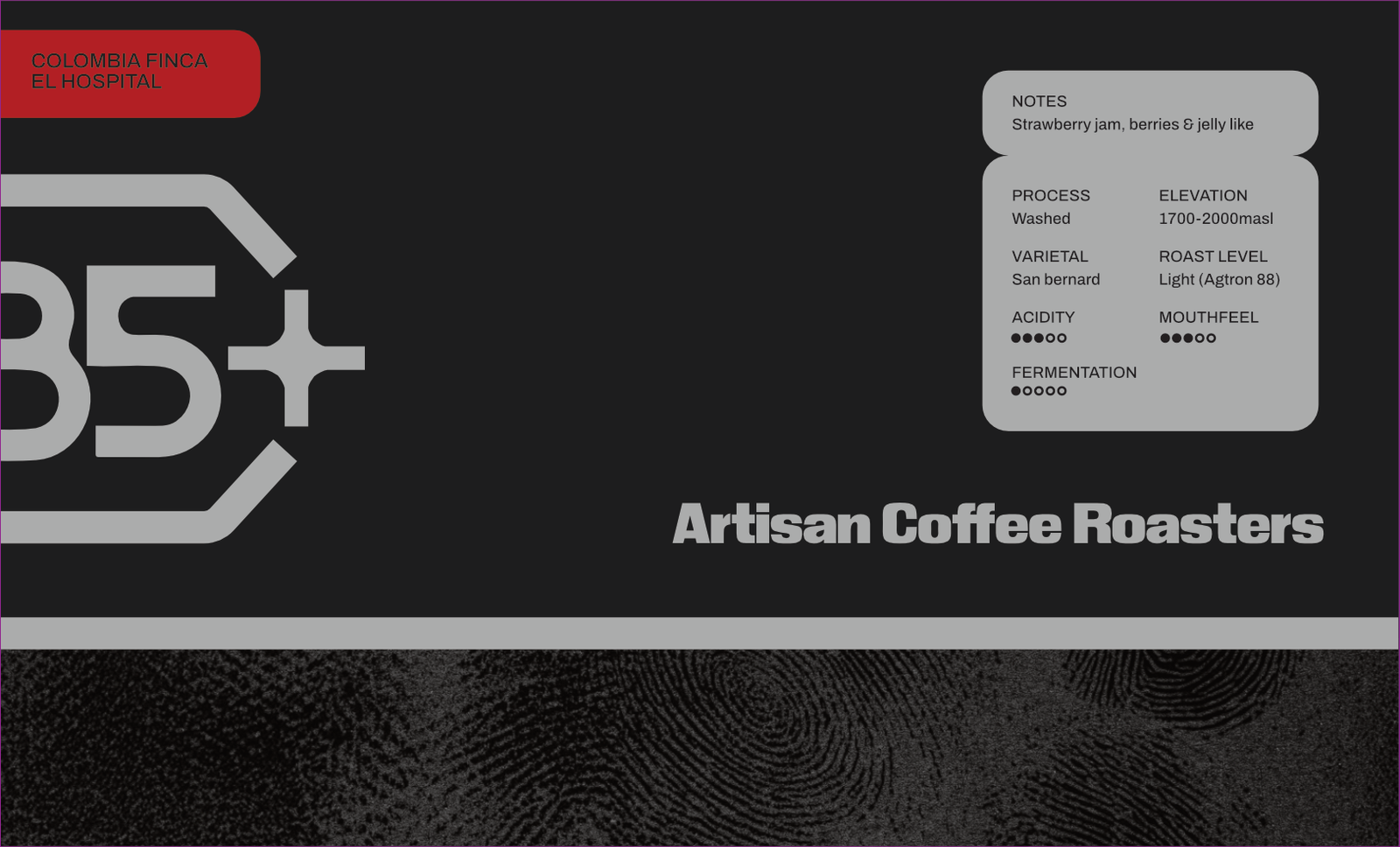
COLOMBIA FINCA EL HOSPITAL
This coffee offers strawberry jam & dried fruits aromatic with a structred body & expressive brigh acidity. Notes of berries, candy, purple fruits & a sweet jelly like finish
This coffee offers strawberry jam & dried fruits aromatic with a structred body & expressive brigh acidity. Notes of berries, candy, purple fruits & a sweet jelly like finish
Origin Story
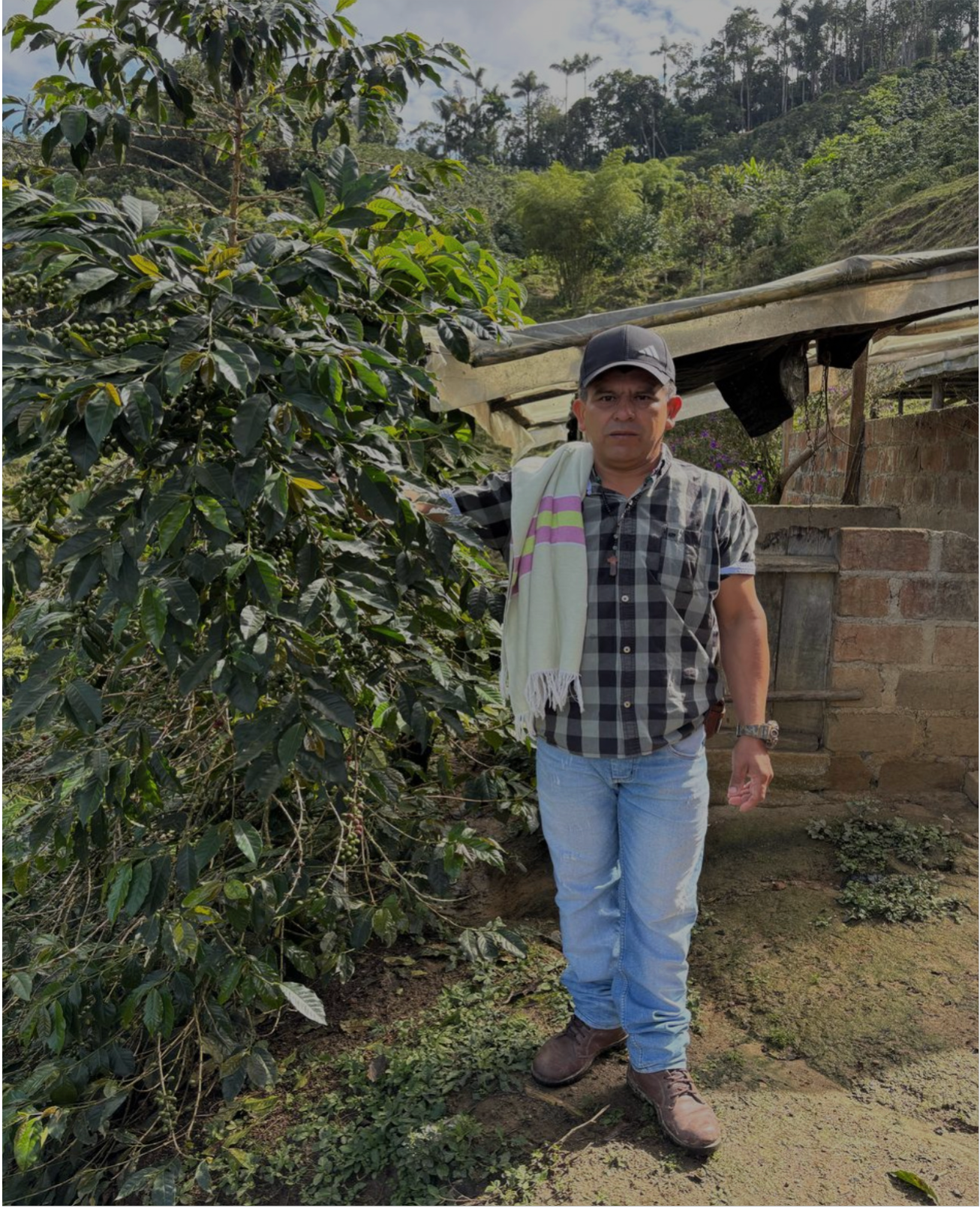
Colombia Finca El Hospital by Javier Pencue El Hospital Farm, managed by Javier Pencue Rojas, is located in Guadalupe, Huila, Colombia, in the village of Sinai, at an altitude of 1,780 meters. Founded in 2007, this 24-hectare farm has 4 hectares planted with 15,000 coffee trees of Caturra, Bourbon Rosado, and Colombia varieties.
Javier, a first-generation coffee grower, runs the farm with the Pencue Fierro family, employing 2 permanent workers and 6 seasonal pickers. The name “El Hospital” is a nod to its history—neighbours would bring their sick animals here for treatment.
Though sometimes referred to as the “Cold Hole,” the name “El Hospital” certainly has a more appealing ring to it.
Details
Elevation
Process
Varietal
Score
Storage
Protect the Work in Every Bean
Freshness isn’t simply about time — it’s about control. Exceptional coffee deserves storage that honors the craft behind it. These principles keep your beans expressing their full origin character, processing detail, and intended flavor potential.
The Essentials
– Store whole beans in an airtight, opaque container. The original bag with its one-way valve is designed for this — simply press out excess air, roll the top down tightly, and secure it.
– Keep in a cool, dark cupboard, stable between 15–25°C. Avoid stoves, windowsills, and warm appliances.
– Grind on demand. Grinding just before brewing is the single most effective step to preserve volatile aromatics.
What to Avoid
– Fridge storage. Coffee is hygroscopic — it absorbs moisture and odours readily. Condensation from repeated opening and closing degrades the beans rapidly.
– The four agents of staling: oxygen, heat, light, and moisture. Control them relentlessly.
Freezing: A Precision Tool
Freezing suspends peak quality when done correctly — and damages it when done carelessly.
– Portion into single-brew or 2–3 day amounts before freezing.
– Seal in airtight vacuum bags, or press all air from heavy-duty zip-top bags.
– Grind directly from frozen (no thawing required — modern grinders handle this well), or let the sealed bag reach room temperature fully before opening to prevent condensation.
– Never refreeze.
Rest Matters: The Peak Window
There is no universal peak window. Resting requirements depend on bean density, processing method, and roast profile.
Many coffees reach full expression between 2 and 4 weeks post-roast. However, exceptionally dense, high-grown lots — such as top-tier Geishas or other high-altitude selections — often need extended rest. These coffees degas slowly and can reach their full aromatic and structural peak at 40, 50, or even 60+ days. Opening too early risks muted aromatics, hollow body, and a carbonic sharpness that masks the coffee’s true character.
How to Brew
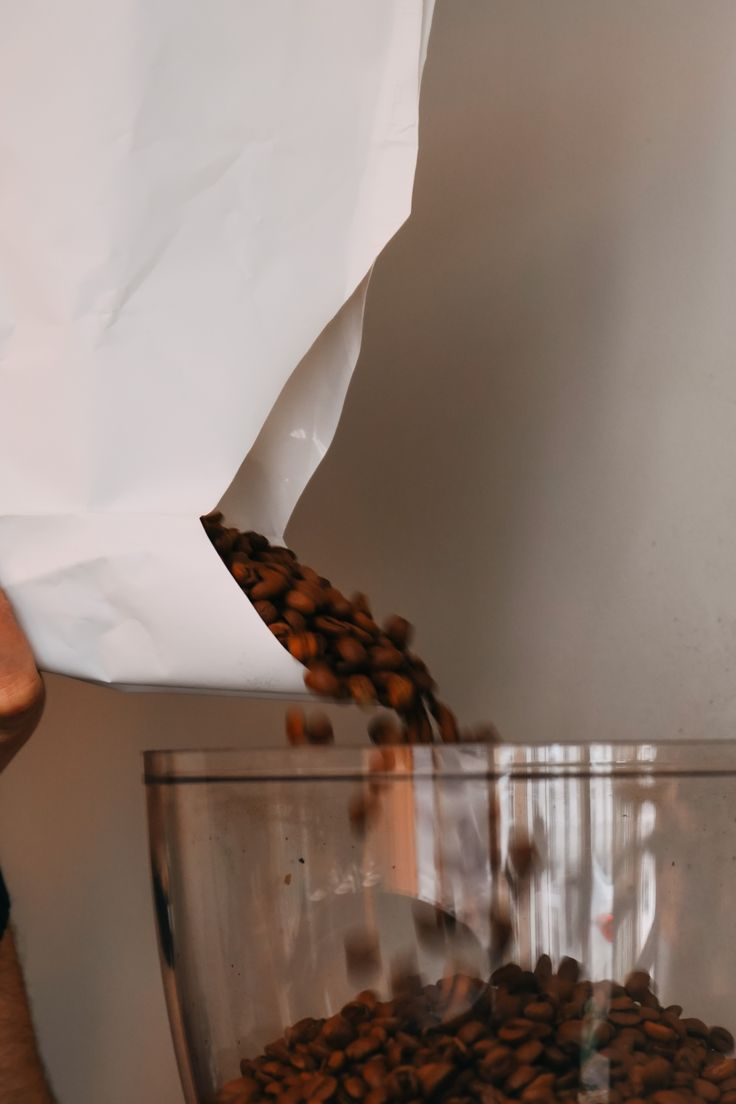
We recommend starting with a 1:18 coffee-to-water ratio, which provides an excellent total extraction level and maximizes flavor pulled out of the ground coffee. For our single origin coffees we recommend a pour over method either on a Chemex, V60 or Kalita Wave.
Exctraction Guide
How to Brew
We recommend starting with a 1:18 coffee-to-water ratio, which provides an excellent total extraction level and maximizes flavor pulled out of the ground coffee. For our single origin coffees we recommend a pour over method either on a Chemex, V60 or Kalita Wave.
Explanation Guide
Explore More
Shop All